Categories

Cocktail on a Stick
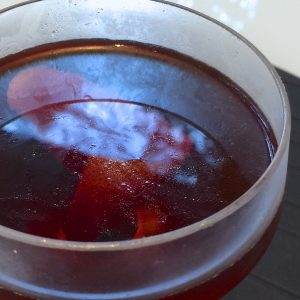
Homemade Swizzle Stick

Artist's rendering of the elusive "baton lele"

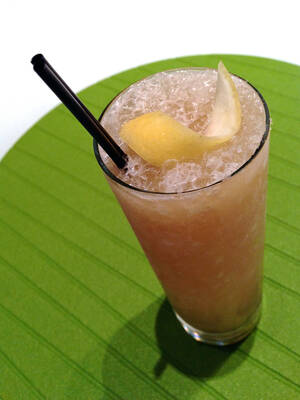
There’s a class of cocktails out there called the swizzle. They can contain any variety of ingredients but are often rum-based with a “Tiki” flair. A swizzle can be a Punch or something more akin to a Daiquiri, but they are served with crushed ice and usually find their origin in the Caribbean. What sets the swizzle apart from a Julep, for example, is the preparation. This is truly a cocktail-on-a-stick!

The Swizzle Method
I was a little skeptical at first, thinking that this is really just a primitive blender, but using the proper technique and the appropriate tool, it’s possible to get a nice coating of frost on your glass while you super-chill the contents. Basically, you dunk the spoked end of a stick into your iced cocktail and with the other end sticking up out of the glass, you rub it back and forth between your palms to carefully mix the ingredients. Once you get the hang of it, you can do this very quickly, steadily lifting up through the ice or pushing down toward the bottom. You can also mix just a specific layer in this way, avoiding chunks of fruit or muddled ingredients if the recipe calls for it.

Obtaining your own Swizzle Stick
The tool for this job isn’t just a simple plastic drink stirrer that most people associate with the term. This stick is cut from a tree that is native to the West Indies and is known for its unusual, five-pronged branches. With the Minnesota State Fair in full-swing, you might expect to find this stick for sale at the Merchandise Mart, or perhaps the Grandstand, but you won’t. Nor will you find one in the Horticulture Exchange or anywhere near Machinery Hill. In fact, you would be hard pressed to find a swizzle stick anywhere in St. Paul!

So, if you can’t buy one at the State Fair, surely you can find these exotic sticks online, right? Wrong. It seems the only way you can obtain an authentic swizzle stick is to get one from a good friend, fly to Martinique where they call it a baton lele and bring one back with you, or make one yourself. I love a challenge like that, so when I read Chris Stanley’s post regarding a DIY solution to this dilemma, I had to give it a shot. Not everyone likes such projects, and even though this is pretty simple, I decided to host a giveaway drawing (more about that later).

Click here and take a bigger gulp of this article

BarSmarts™ Mixology Course

BarSmarts Tools

Whether you are a seasoned professional or someone just getting interested in mixology, I highly encourage you to check out the BarSmarts™ program. Led by the famed team of partners of Beverage Alcohol Resource (BAR), LLC, Dale DeGroff, Doug Frost, Steve Olson, F. Paul Pacult, Andy Seymour and David Wondrich, BarSmarts™ was designed exclusively for Pernod Ricard USA and aims to deliver the most comprehensive spirits and mixology education available.

Summit Sips is Now Certified
I just completed the BarSmarts™ WIRED certification course and I thought I’d write a few words about this program. First of all, I have always been curious about bartender certification and I have a lot of respect for everyone in the trade that can successfully navigate a busy night behind the stick. Managing customers several bodies deep, staying on top of wait staff orders and keeping track of tabs and cash transactions—all while maintaining a watch on customer behavior and consumption—seems like a hectic environment to make a buck. It can be a lot to handle and comes with some serious legal and economic responsibility since the bar is often the primary revenue stream for both restaurants and drinking establishments.

Not long ago, A friend of mine completed a state-certified bartending program and felt that it was lacking in many ways. That program focused on speed, efficient technique and drink recipe memorization rather than history, product knowledge, and creativity. Although I recognize a business’s need to move product and to do so in a way that gets the job done quickly, safely and economically, I was more interested in understanding spirits, how products are made, how they compare, why one might cost more than another, the importance of fresh ingredients, how to balance flavor, and most importantly—how to build a delicious cocktail, be it a classic or a contemporary riff. This focus on quality and ingredients was much more important to me than learning how to accurately free-pour.

Click here and take a bigger gulp of this article

So You Wanna Make A Great Cocktail
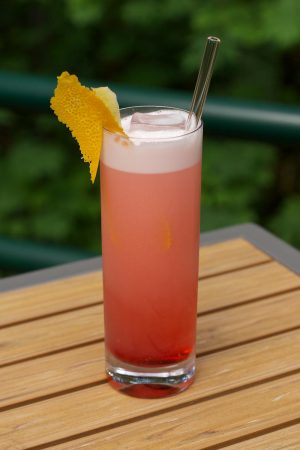
shaker

IMG_2125You can do it. I know you can, because I believe anyone can, provided they understand that the best cocktails consist of two basic elements:

  1. Great ingredients
  2. Great technique—with the equipment you have

You won’t resolve yourself to mediocrity once you realize that you’re not required to own a multitude of special tools to get the job done. Of course, using top-shelf products and fancy equipment to build your cocktails can make things easier, faster and better—but getting good results using what’s available is always the goal.

Is great technique a substitute for great ingredients?
No. As you’ll see, proper technique is closely tied to the equipment you are using, and rarely can it replace or mask a substitution or omission. Ingredients and technique are equally important, and as you face inevitable limits due to budget, space or availability, you’ll need to understand how to use what you have and make the most of it.

Great Ingredients
There’s no question that what you put into something has the greatest effect on what comes out. It’s the same with cooking a gourmet dinner. When it comes to making cocktails, there are some things you cannot substitute. Fresh citrus is definitely one of them. Don’t use the sweetened bottled lime juice available at the liquor store. Also, don’t bother with bottled lemon juice thinking you are saving time. It just doesn’t make sense when you can grab a few lemons and limes at the local market any day of the week. Besides, fruit is almost drink sized! Cut and squeeze only what you need for a drink or two. You won’t be wasting anything, and the fresh peel will often end up as a cocktail garnish, so you need to get the fruit anyway.
Some spirits cannot be substituted either. Chartreuse and Benedictine, for example, are totally unique, as are plenty of others. Yet, there are some liqueurs that can be replaced, such as subbing triple sec for Cointreau, with very little affect on the outcome. It could also be argued that light rums are similar enough, or that vodka should be flavorless anyway. Just remember that if a recipe calls for one brand, it’s usually because another might not contain some subtle flavor characteristic that is important in the cocktail. When in doubt, ask someone who knows the drink and they can suggest alternatives.

Don’t skip the bitters! You may not think a drink that calls for just a dash Angostura even needs something so tiny in the first place, but skipping the bitters is like not salting your soup. Don’t worry,

Click here and take a bigger gulp of this article