          
|
There's a certain level of comfort when it comes to the classics. There was no Tiki movement, no vodka, and folks knew what to expect from a cocktail. By today's standards, times were simpler then, although it's all relative. Still, we think there is virtue in exploring basic, spirit-driven recipes that have stood the test of time—and some that have become lost in it. The Metropole is one such drink.
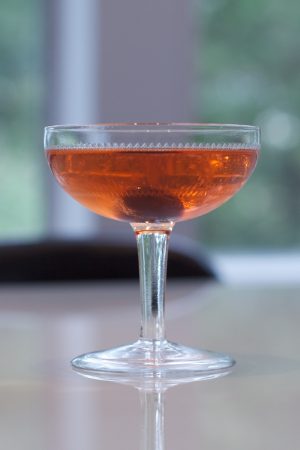
Originally the house cocktail for the Metropole Hotel in New York City, this brandy based drink has survived since the late 1800s while the hotel where it was created is long gone. It's a common story shared by many classic cocktails, although in our opinion, too few of them contain brandy. It's a simple enough formula, but it has changed somewhat over the years.
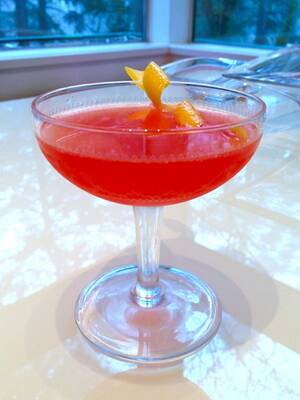
Metropole 2 oz cognac 1 oz dry vermouth .5 teaspoon simple syrup 2 dashes Peychaud’s
Click here and take a bigger gulp of this article. . .
When we first saw the ingredients for this cocktail at The Violet Hour in Chicago, we couldn't bring ourselves to order it. It seemed just too over-the-top with bitter ingredients. That was our first mistake. When the recipe appeared in Beta Cocktails, a book we recently mentioned in conjunction with the Art of Choke, we thought it might be time to check it out, but we never had the right combination of ingredients—most notably, we didn't have a Blanc vermouth. That was our second mistake. Today, we finally corrected both situations by picking up a bottle of Dolin Blanc and using it to construct one of the most interesting and surprising results we have tasted in a very long time.
Eeyore's Requiem is another recipe we have collected by Toby "Alchemist" Maloney, one of the
Click here and take a bigger gulp of this article. . .
This is another forgotten drink recipe from the Prohibition era. It appears in print as early as Harry Craddock's Savoy Cocktail Book but we picked it up in Ted Haigh's excellent Vintage Spirits and Forgotten Cocktails. As you might have guessed, it uses calvados as the base spirit. Like cognac, calvados is a type of brandy from France, although instead of grapes it comes from apples. Past recipes on Summit Sips that have featured apple brandy are divided among drinks like the Jack Rose and the Newark that make use of its American cousin, Applejack, and others such as the Widow's Kiss and our own Circean that contain the more refined French calvados. It's one of those spirits that seems to be overlooked by a lot of people and that's a shame, but it's not why this cocktail recipe almost disappeared.
Click here and take a bigger gulp of this article. . .
Here's a great and somewhat unusual cocktail for those of you looking for a spirit-driven tipple that's a bit out of the ordinary. It comes by way of Ben Dougherty of Seattle's Zig Zag Café. It contains equal portions of bourbon, dry sherry and Ramazzotti, with a splash of Cointreau and a couple dashes of o-bits. Wait. Back up. Ramazzotti? I guess we couldn't slip that one past you. Like we said, this drink is a bit unusual, so it stands to reason that it might include an odd ingredient.
So, bourbon—no problem. Sherry isn't that common in cocktails but it's not unheard of. Cointreau and orange bitters—easy. But what's with this Ramazzotti? Actually, it's not that hard to find. It's another Italian Amaro, or potable bitters that happens to be a lovely aperitif. This one comes from Milan and it's not very bitter at
Click here and take a bigger gulp of this article. . .
Between the heat and the thunderstorms, it's a wonder anyone in the Twin Cities is getting any sleep. This week, some of us awoke without electricity to a neighborhood full of snapped branches and uprooted trees while our northern neighbors in Duluth, Minnesota are dealing with massive flooding. With so much going on related to weather, we half considered creating a cocktail called Straight Line Winds. We might still, but this being the longest day of the year (and this week feeling like the hottest) we decided to look for something that sounded a bit more refreshing and not so menacing. Today, as if coming to our rescue, the postman delivered the July-August 2012 issue of Imbibe Magazine.
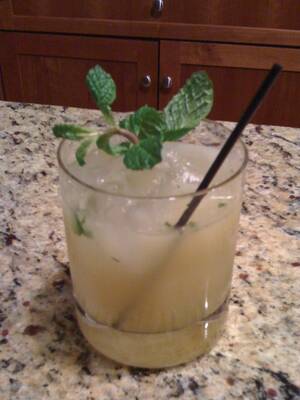
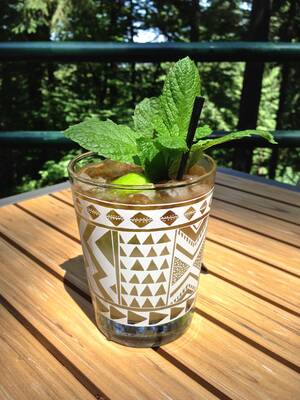
If you aren't a subscriber, we highly recommend it. Like every issue, this one contains some fantastic recipes and we'd like to share one of them. It's called the Pontarlier Julep.
Click here and take a bigger gulp of this article. . .
In some respects, our Drink of the Week was an inevitable recipe. It’s analogous to the primordial soup of amino acids that first coalesced to create life—given the right conditions, it was only a matter of time before tiny miracles started to happen. Now, imagine you are a bartender (or a famous Italian chef) mixing a classic cocktail, the Negroni, time and time again. One day, as you reach for your ingredients, instead of grabbing Campari, you pull out a bottle of Cynar. It’s an easy mistake—they were sitting right next to each other. Suddenly, you are experimenting with reckless abandon, swapping this for that and thinking, “Hey, this just might work!” Put a few good ingredients next to each other along with a basic formula for success and you are bound to create some tiny miracles of your own.
The Cin Cyn isn’t
Click here and take a bigger gulp of this article. . .
We don't often review books on Summit Sips. Sure, there's the occasional mention when we consider it worthwhile or when we give credit for an inspiring recipe, but by and large, when we write about mixology we tend to stick to the mixing and drinking part of the craft and not the reading. That's not to say you shouldn't bother with books. On the contrary—it's important to familiarize yourself with all of the great resources that are available. Just a few weeks ago we broke stride and wrote about the locally authored North Star Cocktails. But of all the books we have collected over the years, it's Jim Meehan’s PDT Cocktail Book that is quickly becoming our favorite.
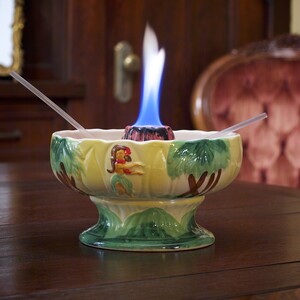
The Leapfrog cocktail was created in the summer of 2007 and in December of 2008 it appeared in the New York Times. Eventually, it found a home in this wonderfully illustrated book
Click here and take a bigger gulp of this article. . .
Named for the Algonquin Hotel on 42nd street in New York, this cocktail gained popularity after Prohibition as the hotel became known for the regular lunch gathering of Alexander Woollcott, Dorothy Parker, Robert Benchley, Harpo Marx and others. It’s still served at the hotel today, but you don’t have to go there to try one. Nor do you have to be a member of an exclusive roundtable lunch group. It's a breeze to make and the ingredients are easy to find.
Algonquin 2 oz rye whiskey 1 oz dry vermouth 1 oz pineapple juice
Stir with ice. Strain into a chilled cocktail glass.
According to David Wondrich, this drink is even better with a few dashes of orange bitters. He recommends Fee Bros. West Indian but also suggests using a squeeze of orange peel. There’s definitely an improvement with the extra kick of orange, but you also have to pay
Click here and take a bigger gulp of this article. . .
The Anodyne Cocktail—for whatever ails you. The name means something that alleviates or eliminates pain, so I guess it could apply to any drink, but in this case it was chosen for a medicinal combination of ingredients first tried by Wesley Moore in 2009 when it appeared on Chuck Taggart's Looka! Gumbo Pages weblog. According to Chuck, the cocktail was inspired by the Perfect Martini which is a Martini made using equal portions of both sweet and dry vermouth.
The first thing you might notice is that this drink doesn't use a typical sweet vermouth, nor a typical dry one. It wouldn't be very innovative if it did. Instead, the substitutions are far more interesting and the proportions are such that they setup a wonderful balance between them. As simple as it sounds, it's much more than a basic substitution riff. What we have with the Anodyne is another
Click here and take a bigger gulp of this article. . .
Here's a recipe I have been meaning to share for quite some time. It's a highball that was my first cocktail at The Violet Hour in Chicago. That was several years ago now, but it's one of those memorable concoctions that has often been the subject of google searches and occasional experimentation for me. Eventually, it came up in discussion on the LTHForum where Toby Maloney has shared some of his other recipes, and although we never got the official proportions for the Zarzamora, the discussion did lead to a successful rendition.
Zarzamora is what they call the blackberry in Argentina. That’s significant for a couple of reasons. First, this drink has blackberries, but more importantly, it contains Fernet Branca. If you recall, Fernet is a bitter Italian Amaro, and it’s one of the strongest in terms of bitter herbal
Click here and take a bigger gulp of this article. . .
|
 Antique/Vintage Store Spotlight:
Cannot generate shortcode for this configuration. Cannot get product data.

|