|
|
  Up on the column of the Rain Vodka still.
I thought I would post a final wrap up regarding my recent trip to Kentucky. I know everyone out there has been clicking “refresh” waiting for the next posts, so I figured a nice conclusion was probably in order. I also wanted to say a few words about another product I brought back home with me from the Buffalo Trace Distillery.
It’s one thing to take a long weekend and go for a drive. It’s something else to set a destination that is 4 states away and takes a full 24 hours to get there and back. Yet, despite the long time spent behind the wheel, Louisville is definitely within reach by car from the Twin Cities. I know the area has a lot more to offer visitors than we had time to see but we focused on the Bourbon Trail®. This was also an excuse to see the countryside, visit antique shops and stay at charming B&Bs. The bourbon was truly a bonus.
Another bonus was the discovery of Rain vodka. Rain has been around since 1997, and you don’t have to go to Kentucky to buy it.
Click here and take a bigger gulp of this article →
 Although the basic steps in the distillation process are common, one theme that finally became obvious about Kentucky is the serendipity of converging resources. First and foremost is the land itself. Limestone is everywhere, but in Kentucky, it’s just under the topsoil. In addition, the rock here is free from iron, making it the perfect filter for natural spring water. The fact that it’s so close to the surface makes this water relatively easy to use. From a legal perspective, bourbon can be made anywhere in the U.S., but economically, it makes more sense to bring other ingredients to the water source. Second, Kentucky enjoys fertile soil which, in addition to supporting the native bluegrass, also plays an important role supporting local agriculture—and as we know, making bourbon requires lots of grain, including corn, wheat, rye and barley. Kentucky also has the greatest length of navigable waterways in the lower 48 states. This has facilitated centuries of convenient distribution.
In Kentucky, the alignment of these factors supports 95% of the world’s bourbon distillation, and all of them are making the same basic product. However, individual details can have a dramatic effect on the outcome. Case in point is Woodford Reserve, the smallest Kentucky distillery and the only one using copper stills. Their triple distillation in huge copper still pots reminiscent of those used in Scotland produces a distinct bourbon flavor and a brand that is now the official bourbon of the Kentucky Derby.
Like other distilleries, the process starts with the grain. Woodford Reserve uses a hammer mill to pulverize corn, rye and malted barley before it enters the cookers. Maker’s Mark, on the other hand, uses a roller mill which they claim works to their advantage by not creating as much heat and friction. Does it really matter? It’s hard to say. Buffalo Trace uses a hammer mill too, but this step isn’t the only factor that can affect the final product. The exact proportions of grain probably make the biggest difference, but how they are milled may not matter at all. I like to believe that everything has at least some affect on the outcome, and these small details probably do contribute in some way to the unique flavor of each product.
Click here and take a bigger gulp of this article →
 Although it’s not officially on the Kentucky Bourbon Trail®, I was probably more excited to visit the Buffalo Trace Distillery than any other. Buffalo Trace has won more awards for their whiskey products than any other distillery in the world. We traveled north to Kentucky’s capital, Frankfort to reach the Trace which is situated on 118 acres bordered by limestone cliffs and conveniently positioned against the Kentucky River. Named for this site which was once a migration path for wild buffalo, a distillery in some form or another has existed here since before 1773. It’s first official name was Old Fire Copper Distillery, and the original distillation permit still reads O.F.C., as this permit has never been reissued. That’s because the distillery has never missed a year of legal whiskey production, even during prohibition. Buffalo Trace was allowed to make whiskey for “medicinal purposes” which required a prescription from a friendly and sympathetic doctor. Those days, everyone was “sick”—even children and babies!
We registered for the Hard Hat Tour several days in advance. This is necessary because the tour does not run as often as others and space is limited. Rather than explain the specific details of whiskey production all over again, I’d like to encourage you to read through the last post if you haven’t already. Although the basic steps are the same, each distillery follows a specific method of production to create their own distinct flavor. I’d like to focus on the details that made the tour at Buffalo Trace unique as well as point out things that we found interesting.
Click here and take a bigger gulp of this article →
  Whiskey Creek at Maker's Mark Distillery
Our first day on the Kentucky Bourbon Trail® started with a drive through Bardstown which is south of Louisville. Although we’d spend the evening in Bardstown, we drove straight on to Loretto for a tour of the Maker’s Mark Distillery. Along the way we passed Jim Beam and Heaven Hill. I had heard good things about the Maker’s Mark tour, and since it was somewhat off the beaten path, we decided it might work best to start there and make our way back to Bardstown in the afternoon.
Our arrival was timed perfectly and we started a tour of the grounds, crossing Whiskey Creek to visit each building in turn. Along the creek stands one of the oldest liquor sales buildings called the Quart House where customers used to come and fill up their quart jugs. Those days are gone, but the old building remains. The entire “village” of black buildings is surprisingly beautiful, each with red shutters and bottle-shaped cutouts. Every building has a purpose and is sized accordingly.
 Maker's Mark Still House
From yellow corn to White Dog
As we approached the tall Still House, the air became filled with the aromas of sweet grain. The Still House is perhaps the most interesting building on-site because it combines so many steps in the process of production under one roof. The highest roof covers the 38-foot column stills, but that’s not where production actually begins.
It starts with a 10-acre spring-fed lake on the property. Although it was not immediately visible, Maker’s Mark draws all of it’s water from this single source. The geology in the area makes this the perfect location to create whiskey. Limestone acts like a filter for the water, removing impurities such as iron which would darken the whiskey and destroy its delicate flavor. The second natural ingredient is the grain. By law, bourbon mash must contain at least 51% corn. Maker’s Mark uses 70% corn, 16% red winter wheat and 14% malted barley. This enters the Still House through a roller mill which gently crushes the grain before it is put into mash tubs.
Click here and take a bigger gulp of this article →
 The trip started with a pre-dawn drive and continued with some morning cruisin’, followed by an afternoon on the road and finally ended with even more time behind the wheel. It’s a long trip, but we managed it in one day, pulling into Louisville at about 6pm local time with the sun and southern warm weather to welcome us.
The Seelbach
This first day was supposed to be dedicated to “getting there” but once the car was parked we definitely made the most of it. We arrived at the hotel and were greeted by valets, eager to help us with our bags. It’s actually pretty quiet this time of the year in downtown Louisville—this is the calm before the storm. In about a month, it will start to pickup as everyone prepares for the onslaught of over 100,000 visitors on Derby Day.
As you can see from the image in the last post, the actual building is impressive, taking up the corner of the block with it’s brick and stone. The decorative facade gives clues to the details within. The lobby’s expansive white marble floors give rise to a colorful palette of other imported marbles—Italian stone was used everywhere, from the columns to the front desk. Gilded ironwork and intricate plaster crown molding decorate the entire room. Giant crystal chandeliers hang beneath the 800 backlit glass bevels, barreled into the ceiling that was once a skylight some three stories high. I was impressed, probably much like the 25,000 people that filed through this room on opening day back in 1905. The lobby appears today virtually unchanged in over 100 years.
 Impressive selection of bourbon at the Old Seelbach Bar
We took elevator number 3 up 8 floors to our room which was nicely-appointed. I later learned that a ghost—referred to as the Lady In Blue—has been seen passing through the closed doors of elevator 3 on separate occasions. This is the elevator shaft into which she plunged to her death in 1936. Her apparition was last seen in 1987, and no, she did not give us the pleasure.
The Bourbon Tasting Begins
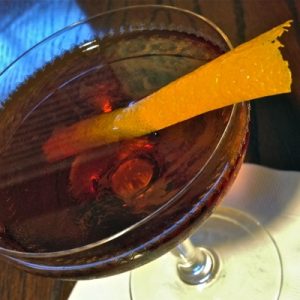
Adjacent to the lobby is the Old Seelbach Bar. After our long drive, we treated ourselves to the hotel’s signature cocktail, the Seelbach which we enjoyed at the mahogany bar. The bar itself boasts an incredible whiskey selection, many of which are smooth, single barrel bourbons. I’m no expert (yet) but I certainly know how to count a lot of bourbons when I see them all lined up on the back bar! With all of these choices, we knew we would need some recommendations from the staff.
Click here and take a bigger gulp of this article →
 
A few weeks ago I posted a teaser about our upcoming tour of the Kentucky Bourbon Trail®. Well, it’s time to kickoff the bourbon trail series starting with a special Drink Of The Week and a perfect start to our exploration of Kentucky bourbon country. Click here to see all of the Kentucky bourbon posts on one page. New posts will be added over the next few days so you can see how the trip progressed. The first destination of our tour was the Seelbach Hotel in Louisville, KY.
The History
Listed on the National Register of Historic Places, the Seelbach Hotel is a perfect example of gilded-era luxury and beauty which recently underwent a $12 million restoration. Its turn-of-the-century Beaux Arts Baroque style served as the backdrop for Tom and Daisy Buchanan’s wedding in F. Scott Fitzgerald’s The Great Gatsby. Once a fellow resident of St. Paul, the famous author had plenty to describe of this 1905 location that is still considered the premier hotel of Kentucky. I should also mention that the drinks are good too!
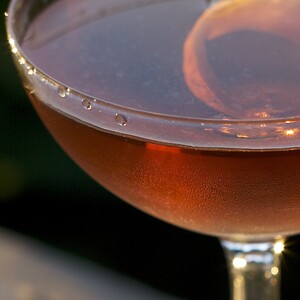
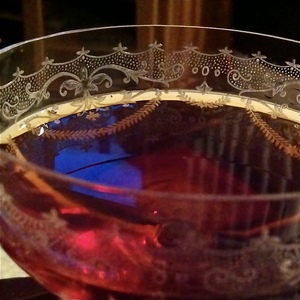
The Seelbach cocktail is named, of course, for the Seelbach Hotel where it was created and served in the early 1900′s. However, it disappeared during Prohibition—a time when the hotel was not allowed to serve it. Without a speakeasy, the recipe was lost and forgotten until it was rediscovered in 1995. At long last, the recipe is finally available and was first printed in the book, New Classic Cocktails by Gary and Mardee Regan.
Click here and take a bigger gulp of this article →
 Very soon, I’ll be taking a road trip with my wife through bourbon country. As the preparations are coming together I thought I would write a short teaser to kickoff a series I’ll be writing to document the experience.
Bourbon whiskey is the only true American spirit, and the heart of production lies within the state of Kentucky where legendary distillers have crafted the world’s finest bourbons with over 200 years of tradition. Our goal is to explore the area, experience those traditions and enjoy the countryside. There’s also plenty to see outside of the distilleries, so we hope to take in as much of the local culture as we can.
Since this is a road trip, the first leg of our journey will be the long drive to Louisville. It’s about a twelve hour trip from the Twin Cities, but if we leave early enough, we should
Take a bigger gulp of this article. . .
|
|
Most Popular