|
|
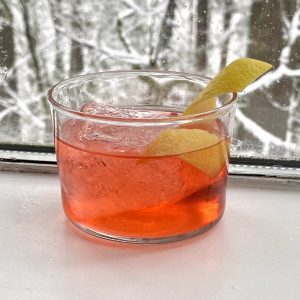
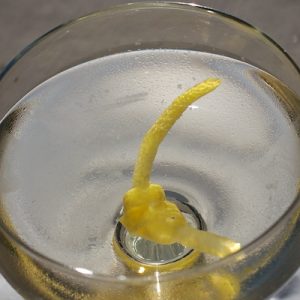
 This week I want to keep it short and sweet. The Vesper, or as some call it, the Vesper Lynd, is a drink named after a Bond girl. In fact, it’s the only drink ever invented by a fictional character named after another fictional character. If this is all going over your head, the Vesper is the martini that James Bond orders in Casino Royale, and he later decides to name it after his love interest. Indeed, this is the drink that inspired the graphics for Summit Sips.
Vesper 3 oz gin 1 oz vodka .5 oz Lillet Blanc
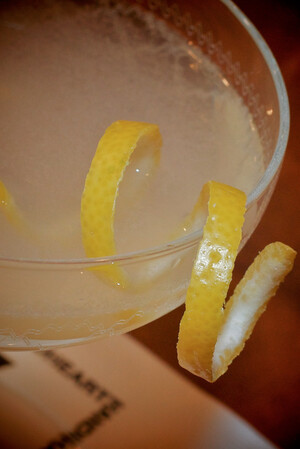
Combine in a shaker, add ice and shake to chill. Strain into a chilled cocktail glass and garnish with a twist of lemon.
Bond eyes his vesper.
For a completely fictional set of circumstances, Ian Flemming created a cocktail that is actually pretty good. As martinis go, this is
Take a bigger gulp of this article. . .
 I wanted to write a few words about my experiments with Punch. As the tagline suggests, Summit Sips is about exploring the mysteries of mixology. Whether or not you like the word “mixology”, I don’t advocate consumption of alcoholic beverages to get “drunk”. I see it more as a culinary pursuit to find a balance of flavors and to pair ingredients in unique (or sometimes classic) ways. Semantics aside, there’s always the benefit of five o’clock refreshment, and sometimes the goal is to lubricate the social gears of a party to stimulate mingling and conversation. In any case, Punch is a great way to explore exotic flavor combinations.
Punch is a borrowed word from the Hindi panch which itself came from the Persian word paantch meaning five, to represent the five typical ingredients in this early beverage: alcohol, sugar, lemon, water and tea or spices. It was brought back to Britain from India in the early 1600s. In fact, punch is arguably one of the first mixed alcoholic drinks to enjoy widespread popularity. Before the American cocktail came on the scene, punch was king.
It’s actually pretty easy to make a punch so potent that it goes just a little too far. Case in point was my own Summit Sips Punch for Grand Old Day. If you wanted to enjoy more than one glass, you had to plan to stay awhile—it really packed a p–, er, I mean, it really packed a wallop! Although I was reproducing a riff on a historic recipe, you can probably guess that the more booze you add, the stronger it gets. However, the harder point to master is achieving good balance, and with punch, that can be tricky when you are combining so many ingredients. Of course, I’m not talking about making “garbage can punch” from your college party days where everyone brings fruit and booze to be dumped into a huge vat for mass consumption. Nor is this about mixing up a batch of Tahitian Treat and pouring in some rum and Sprite. No, we will make a respectable punch—one you can mix for a single guest or something you can build in larger batches to serve at a formal gathering or a dinner party. But how can we ensure a result that’s reasonably strong, balanced, and delicuous?
Fortunately, there’s a memorable little rhyme that can help. It comes from the August 8, 1908 edition of the New York Times which contained an article with the recipe for Planter’s Punch, but the basic framework of ingredients works for just about anything:
Click here and take a bigger gulp of this article →
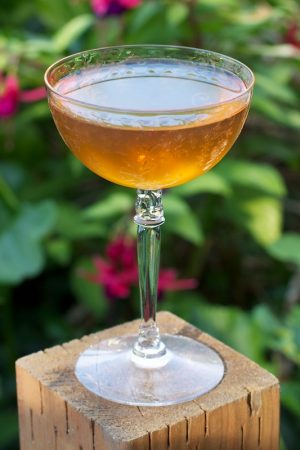
 I have been waiting all year to post this cocktail because I wanted to do so at an appropriate time. I was going to wait until the Wright brothers’ anniversary of flight at Kitty Hawk, NC but that won’t be until December. Thankfully, in 1939, Franklin Delano Roosevelt established August 19th (Orville Wright’s birthday) as National Aviation Day. You are all encouraged to observe the day with activities related to aviation, or in this case, the Aviation.
I doubt FDR’s intent was to promote an interest in cocktails, but it’s a very good excuse to post the Aviation as the Drink of the Week. To a cocktail enthusiast, every classic is important because of what it represents in the world of mixology. Whether it’s a brilliant use of spirits or a unique and successful pairing of ingredients; classics are often foundational. Recipes evolve, but many of them stand the
Take a bigger gulp of this article. . .
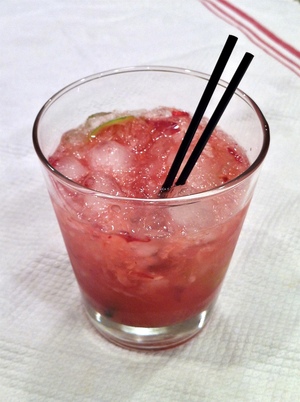
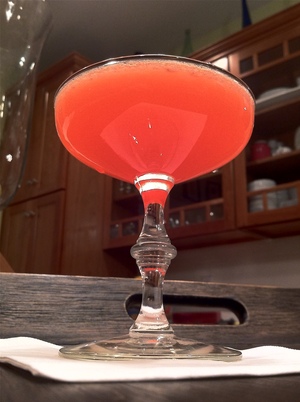
 I simply couldn’t let the summer slip by without featuring my favorite summer drink, the Gin Basil Smash, but this time with a twist. I mentioned this drink last year, but for our Drink Of The Week, it’s different; it’s better—it’s RED!
The Gin Red Basil Smash is a drink from Le Lion – Bar de Paris, in Hamburg, Germany. Jörg Meyer has featured both the red and green version at his bar, but I find that many people don’t even realize basil comes in a red variety. Inspired by the Whiskey Smashes that he enjoyed at the Pegu Club in New York, Mr. Meyer brought the classic smash technique back home with him to Germany where they tried it with gin. Adding basil almost as a joke, and later, writing about the cocktail, word got around. Soon, the drink was being served at bars all over Germany to
Take a bigger gulp of this article. . .
Supposedly, July 27th was National Scotch Day. I know it’s not the most popular holiday, but the timing was pretty good (it was a coincidence, really) for describing the Scotch tasting event last week and for featuring the Blood and Sand cocktail the week before. I thought about selecting another Scotch drink this week but I decided it was time to move on. That’s when a friend of mine finally tracked down some Cherry Heering and made the Blood and Sand. I wondered if perhaps there were other readers looking for additional ways to use cherry brandy, so I thought I would feature the Singapore Sling.
It can be a delicious cocktail, depending on the recipe you use. That said, it’s just as easy to make one taste awful. Part of the problem is that like a lot of cocktails, the original recipe was lost and this has caused
Take a bigger gulp of this article. . .
 I’m not sure where I read it, but I have long believed that it’s a good idea to always have a bottle of champagne chilling in the refrigerator. You just never know when a special occasion will present itself, or when someone will share news that is worthy of celebration. Sometimes, however, not everyone wants to drink bubbly, or perhaps you think it’s time to swap that bottle for something new. Whatever the circumstance, it’s never a bad time to open a bottle, and sometimes sharing a round of champagne cocktails is enough of an excuse. This week, I want to share the French 75, a wonderful twist on the Collins that is perfect for warm summer nights.
The French 75 is named for a French-made 75mm artillery canon that saw widespread use in World War I. It’s revolutionary recoil design allowed rapid firing without the need to reposition
Take a bigger gulp of this article. . .
 You may be wondering, Martinez? Don’t you mean Martini? Well, I suppose I mean both. You see, the origin of the Martini is somewhat fuzzy, but almost everyone agrees that the Martini started life as the Martinez, and when you consider the ingredients and how cocktails evolve, it’s easy to believe.
As important and recognizable as the Martini is in the pantheon of cocktails, few people have ever heard of the Martinez. Instead, we recognize the V-shaped glass dripping with sweat, the ice cold gin and vermouth glistening like a clear, perfect gem, the olive or lemon twist garnish—the Martini is iconic. And yet, we are really talking about the Dry Martini, a more accurate name because of the fact that it is made with dry, French vermouth. Of course, that would imply there was a sweet version, right?
It’s true. The first Martini was concocted of gin and
Take a bigger gulp of this article. . .
 With everything going on lately related to the World Cup, there’s a completely different Cup that gets pretty popular this time of the year. Take your mind away from soccer (or football, if you prefer) for a moment and consider the fact that Wimbledon is just around the corner. Like Kentucky Derby goers with their Mint Juleps, everyone at Wimbledon seems to enjoy one refreshment while they watch men and women chase the fuzzy yellow ball around the grass courts. That drink is the Pimm’s Cup.
Many people on this side of the Atlantic have never even heard of the Pimm’s Cup, let alone Pimm’s No. 1, the key ingredient. Maybe you’ve seen the reddish tea-colored bottle on a bar shelf, or perhaps you even own some but you’ve never known what to do with it. What exactly is Pimm’s No. 1 anyway, and what happened to No. 2 and 3 for that matter?
 James Pimm
Pimm’s No. 1 is a gin-based liqueur flavored with spices and herbs. Created in 1823 by James Pimm to be served at his oyster bar in London, the Pimm’s Cup became so popular that he eventually started bottling the main ingredient following a secret recipe. Weighing in at only 50 proof, Pimm’s No. 1 is not a strong spirit, making the Pimm’s Cup the ideal hot summer refresher—and allowing thirsty fans to indulge in more than one. A “cup” is actually a style of drink usually mixed up in a bowl with fruit, similar to sangria only using hard spirits instead of wine. There is a Pimm’s No. 2, 3, 4, 5, 6 based on other spirits such as Scotch, brandy, rum and so on, but these less popular versions are seasonal or have been phased out. When people talk about Pimm’s, they mean Pimm’s No. 1.
The basic recipe is a combination of Pimm’s and lemonade, but the problem with that description is that in England, lemonade is what Americans would call
Click here and take a bigger gulp of this article →
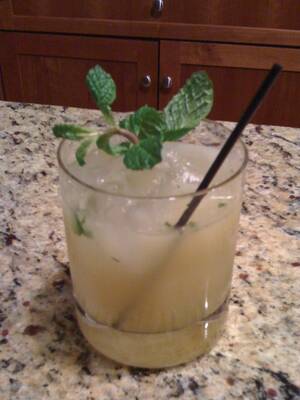
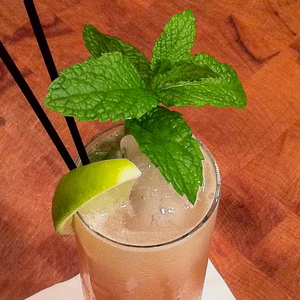
 About this time of year I start longing for the Gin Basil Smash, but my basil is just barely getting started. My mint, on the other hand, gets established quickly, and sometimes I even have some left over from Derby Day. What to do? Make the Southside cocktail! It’s a delicious summer drink that helps you forget about your basil for a while, and it’s perfect for warm weather.
The first thing you are going to notice, besides the fact that we are using fresh mint, is that this is another gin drink. By now, you should realize that a good share of classic cocktails, or at least a significant portion that come from the Prohibition era, are made with gin. That’s because gin was about the easiest spirit bootleggers could make—it is a basic maceration of botanicals and it requires no barrel aging. Some cocktails were created in
Take a bigger gulp of this article. . .
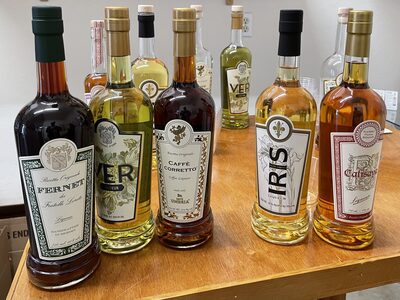
 A selection of apothecary bottles at House Spirits Distillery
It may not look Like much from the outside—if not for the name painted in large letters across the building you might drive right by. You won’t see rickhouses stacked with aging oak barrels. There’s no farmland in sight and no thoroughbreds at pasture. It’s just another commercial building on a regular city block of Portland’s east side. But there’s a little bit of magic happening behind this unassuming facade.
House Spirits Distillery was started in 2004 by Lee Medoff and Christian Krogstad, both of whom were beer makers in a town where you can hardly throw a handfull of malted barley in the air without it landing on a microbrewery. These guys took it to another level. Building upon their combined experience brewing and wine making, they started distilling, and within a year they launched Aviation, a successful
Take a bigger gulp of this article. . .
|
|
Most Popular