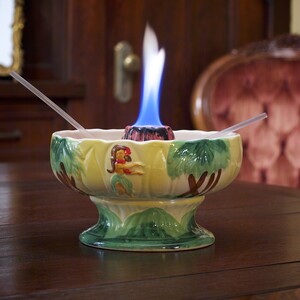
I wanted to write a few words about my experiments with Punch. As the tagline suggests, Summit Sips is about exploring the mysteries of mixology. Whether or not you like the word “mixology”, I don’t advocate consumption of alcoholic beverages to get “drunk”. I see it more as a culinary pursuit to find a balance of flavors and to pair ingredients in unique (or sometimes classic) ways. Semantics aside, there’s always the benefit of five o’clock refreshment, and sometimes the goal is to lubricate the social gears of a party to stimulate mingling and conversation. In any case, Punch is a great way to explore exotic flavor combinations.
Punch is a borrowed word from the Hindi panch which itself came from the Persian word paantch meaning five, to represent the five typical ingredients in this early beverage: alcohol, sugar, lemon, water and tea or spices. It was brought back to Britain from India in the early 1600s. In fact, punch is arguably one of the first mixed alcoholic drinks to enjoy widespread popularity. Before the American cocktail came on the scene, punch was king.
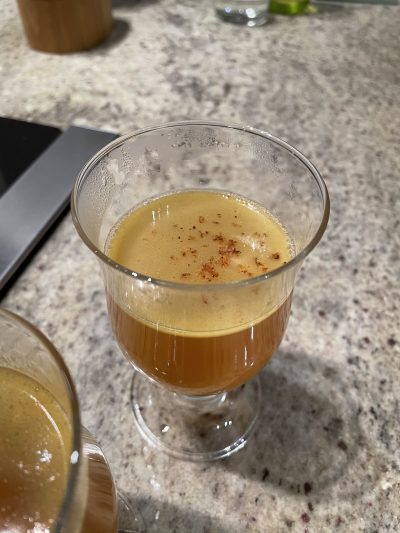
It’s actually pretty easy to make a punch so potent that it goes just a little too far. Case in point was my own Summit Sips Punch for Grand Old Day. If you wanted to enjoy more than one glass, you had to plan to stay awhile—it really packed a p–, er, I mean, it really packed a wallop! Although I was reproducing a riff on a historic recipe, you can probably guess that the more booze you add, the stronger it gets. However, the harder point to master is achieving good balance, and with punch, that can be tricky when you are combining so many ingredients. Of course, I’m not talking about making “garbage can punch” from your college party days where everyone brings fruit and booze to be dumped into a huge vat for mass consumption. Nor is this about mixing up a batch of Tahitian Treat and pouring in some rum and Sprite. No, we will make a respectable punch—one you can mix for a single guest or something you can build in larger batches to serve at a formal gathering or a dinner party. But how can we ensure a result that’s reasonably strong, balanced, and delicious?
Fortunately, there’s a memorable little rhyme that can help. It comes from the August 8, 1908 edition of the New York Times which contained an article with the recipe for Planter’s Punch, but the basic framework of ingredients works for just about anything:
Click here and take a bigger gulp of this article →
Most Popular