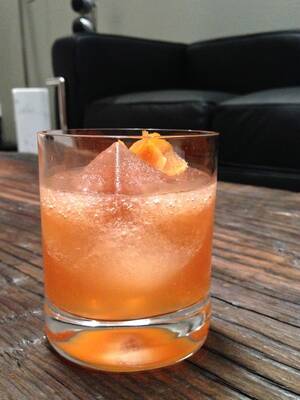
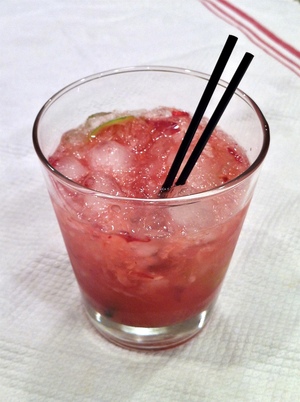
Last year I infused some vodka with rhubarb and it turned out so good that it was gone too quickly. In fact, I believe this was the fastest we went through an infusion ever. I’ve done everything from chili peppers and pineapple to coffee and vanilla, but the rhubarb is my favorite. This year, I decided to try it again and I let it go a little longer to see how the flavor intensified. It turns out that the flavor of rhubarb develops very quickly and after only one day you can see a its gorgeous pink tint and smell the effects. This time I let it sit over the long holiday weekend, and I think I have another winner!
Infusing vodka is about the easiest mixology adventure you can take, and a great way to get started thinking about the flavors you can achieve in a cocktail. To
Take a bigger gulp of this article. . .

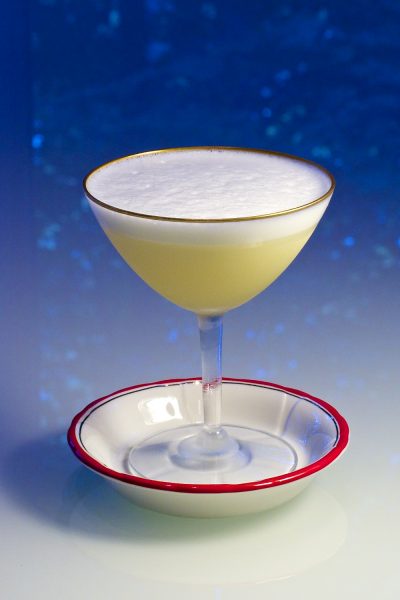
Here we are with another exciting Drink Of The Week. It is exciting, right? This time it’s the Pisco Sour. Is it Peruvian? Is it Chilean? Who knows. It’s probably both. Get yourself some pisco and some limes, not lemons. Did you know that in Peru, what we call limes they call lemons? It’s confusing, but trust me, you should be using limes.
So, what’s pisco? That’s what you really wanna know. Pisco is made from distilled grapes including Quebranta, Muscat and Italiao varieties to create a kind of clear brandy. Depending on it’s origin and the type of grapes used, it can have a woody and sweet aroma and a flavor reminiscent of weak rum. Pisco and the Pisco Sour are the subject of an ongoing dispute between Peru and Chile. Each country claims to own the origin of the spirit and the popular cocktail. While the argument rages on,
Click here and take a bigger gulp of this article →

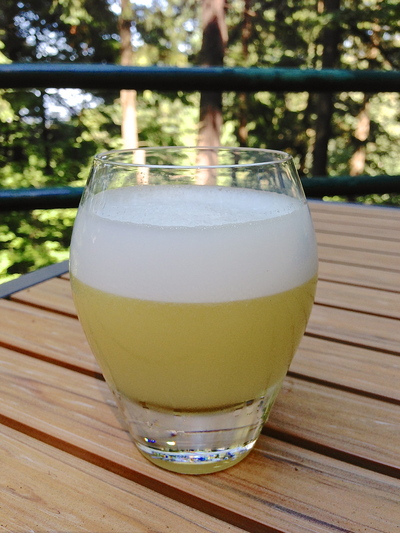
Inspired by Doug’s Pegu Blog, this week’s Drink Of The Week is a classic that has gained some momentum in recent years. The Pegu Club Cocktail originated at the Pegu Club (naturally) in Myanmar (Burma). The club was built in the 1880′s as a Victorian-styled gentleman’s club to serve the British colonials of the day. Of course, the club itself is long gone, but we do have the cocktail which has inspired more folks than just Doug. In New York City, a different Pegu Club was recently established, paying tribute to this great drink with their name. The New York Pegu Club has also played an important role in the current cocktail revival.
I am going to say it right off the bat: It’s a gin cocktail. Now that we have it out in the open and before you run for the hills, think about this: How can a drink survive
Take a bigger gulp of this article. . .

Well, it’s Mardi Gras week, and although we just finished celebrating the Winter Carnival here in St. Paul, New Orleans is just getting started with their own annual festival. This year the new Superbowl champions have another reason to celebrate. But in addition to the parades and the street parties, New Orleans has always played an important role when it comes to cocktails.
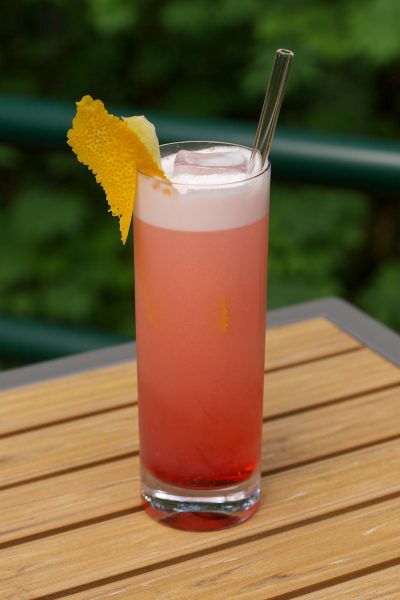
When deciding the Drink Of The Week this week I knew it had to be something historically significant from New Orleans. My first inclination was to feature the Sazerac—often cited as one of the first cocktails ever created, if not the original cocktail. The history is debatable even though it was made the official drink of New Orleans. Important as it is, I am going to leave the Sazerac for another time and instead focus on the equally famous “morning after” remedy—the Ramos Gin Fizz.
As the title implies, this drink has gin, and fizz, but it also bears the name of its creator, Henry C. Ramos. Invented in the 1880′s at the Imperial Cabinet Saloon, the drink was actually made famous by the Roosevelt Hotel where Governor (and later, Senator) Huey P. Long declared it his favorite drink. Long even brought a Roosevelt bartender with him on a business trip to New York so he could teach the Yankee bartenders how to make it properly.
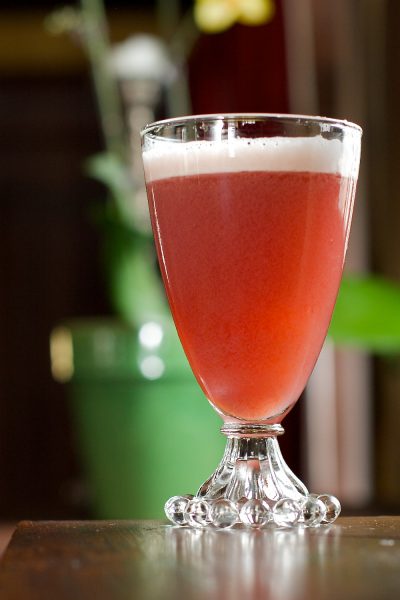
There is sometimes confusion between a fizz cocktail and a collins. The difference usually has to do with service. They are both served in a tall glass, but the collins has ice—the fizz typically does not. Consequently, a fizz would require more seltzer to fill the glass. The regular Gin Fizz and Tom Collins are both sours with the addition of carbonated water, however some recipes offer differing amounts of citrus. Juice measurements and naming controversy aside, we are making a more complex version that contains cream and egg white, but the noteworthy component of this drink is orange blossom water. Here is Huey Long’s gift to New York:
Click here and take a bigger gulp of this article →

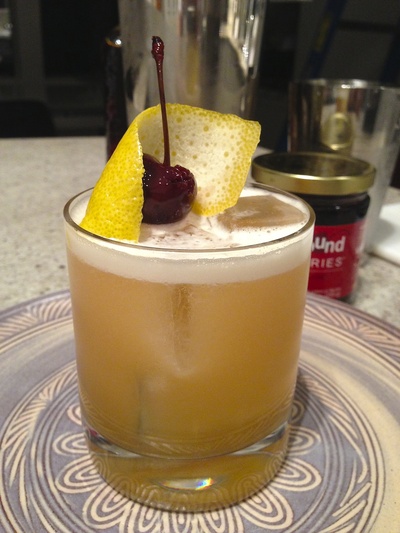
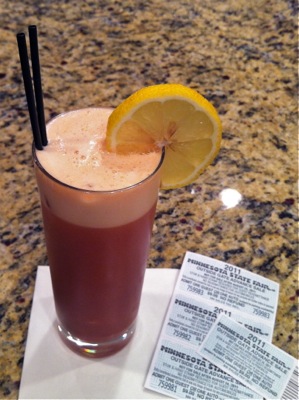
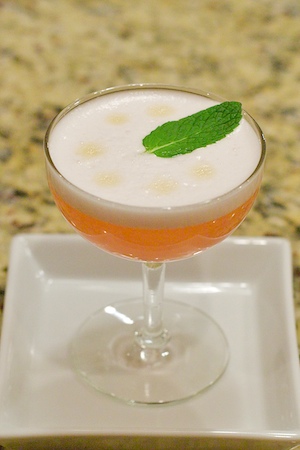
It might not sound like a very exciting drink this week, but chances are you have never had this drink properly prepared. A well-executed Whiskey Sour has the perfect balance of sweet and sour and highlights the wonderful flavors of good whiskey. It has a silky texture so it goes down easy and it’s topped with a wonderful meringue. If that’s not how you would describe a Whiskey Sour then you must be making it wrong.
The sour is an important cocktail classification. There are many examples. A typical sour cocktail consists of a base spirit, a souring agent and a sweetener. In this case, the base is bourbon, and the souring ingredient is lemon juice. Sugar (or simple syrup) is the sweetener. Did you think I was going to use a store-bought sweet and sour mix? You must know better than that by now!
Sour mix itself probably started with fresh ingredients that were pre-mixed behind the bar to save time, but like many bar products, it evolved into a bottle of chemicals and artificial flavors. I suppose it only makes sense since so many cocktails follow the basic sour formula. A margarita, for instance, is a tequila sour—lime is the souring component and triple sec is the sweetener. A daiquiri is really just a rum sour. You get the idea. The problem with the bottled mix (besides the fact that it isn’t freshly squeezed juice) is that various sours call for different souring agents and sweeteners. You could compromise and make a mix that has both lemons and limes, but that’s the whole point—you compromise. The better cocktail is one made to order with fresh ingredients. Oh, and there’s one more thing: egg white.
Click here and take a bigger gulp of this article →
Most Popular