|
|
  Building the Sazerac
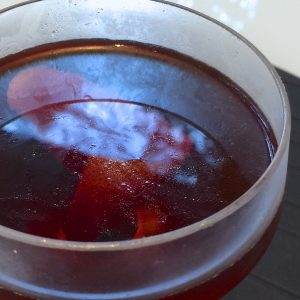
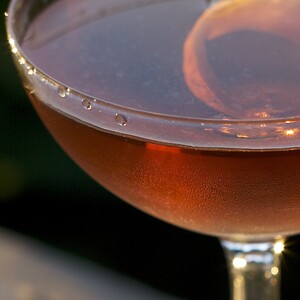
Next week marks the beginning of Tales of the Cocktail, an annual event held in New Orleans to celebrate our truly American invention. But it’s more than that. Tales has become something of a Mecca to cocktail enthusiasts and professionals from all over the world. With so many sponsored events and educational sessions throughout the week, attendees have the opportunity to learn from the experts and discover new products and techniques. In addition to hosting Tales of the Cocktail, New Orleans enjoys a deep tradition of mixology and has been host to the creation of many classic cocktail favorites. Perhaps the one most identified with the city is our Drink of the Week, the Sazerac.
A cocktail was at one time a narrow class of beverages following a very specific formula: spirits, sugar, water and bitters. Today, the word is associated with any mixed alcoholic drink, but the Sazerac stays true to the historic definition. At the time of its invention, it was the bitters that set the cocktail apart. Without the bitters, a cocktail would have been called a sling or a toddy.
Enter one Antoine Peychaud, a Creole apothecary from Haiti who settled in New Oreleans, Louisiana in 1795. At his pharmacy, one could order a compounded beverage made from cognac, sugar, water and his own recipe of bitters. The cocktail was later made by others and and became known as the Sazerac, probably after a popular brand of cognac at the time. Modern recipes typically use rye whiskey instead of brandy.
What sets the Sazerac apart from a cocktail like the Old Fashioned is the preparation of the glass with absinthe:
Click here and take a bigger gulp of this article →
Kimberly and I have a new favorite location for great food and even better cocktails, but it requires a little planning to get there from St. Paul. That’s because this destination is all the way over the Rocky Mountains in Portland, Oregon. The object of our affection is Clyde Common, a Downtown/Pearl District hot spot that is helping to define the cocktail revolution.
Before I jump right into the cocktails, it’s important to mention that first and foremost, Clyde Common is a restaurant. The decor has a basic, modern look that reminds me of a warehouse. The stenciled labels on the wall identify the “KITCHEN” or the “BAR” with a somewhat industrial look that is softened by wooden tables and candles glowing from every corner.
We were seated in front of the open kitchen at a huge table that seats perhaps 20 guests. This “common” seating arrangement was
Take a bigger gulp of this article. . .
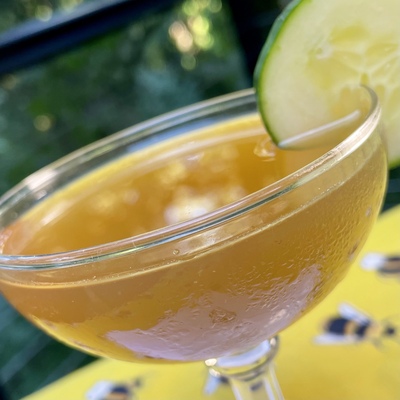
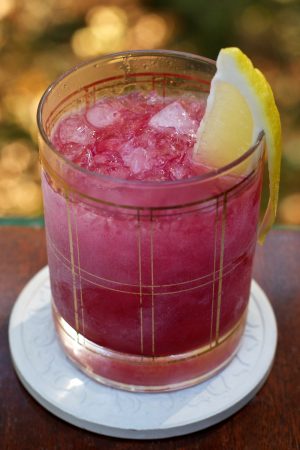
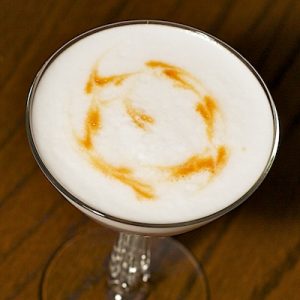
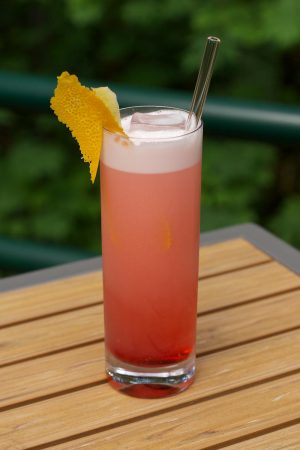
 This past week I wrote about the Whiskey Sour, a classic recipe that, if prepared properly, exhibits a lusciously smooth mouth-feel and a wonderful foamy head—not to mention an important balance of sweet and sour. There is another style of cocktail that is very close to the same drink, but it employs a slightly different method of preparation. The Whiskey Smash is essentially a Whiskey Sour when it comes to the primary ingredients, but because of how they are used, the result is a slightly different animal.
I think it’s worth trying this drink even if you are happy with the Whiskey Sour. For one thing, it skips the egg white in favor of a different flavor profile that emphasizes the essential oils in the lemon peel. This version also includes spearmint which adds another dimension to the drink. If nothing else, making a Smash instead of a Sour introduces you to another cocktail style and allows you to taste and see the difference when the ingredients are so similar.
You may recall an article I posted this past fall that featured the Gin Basil Smash. That drink is a summer favorite of mine, so if you liked that, your gonna love this:
Click here and take a bigger gulp of this article →
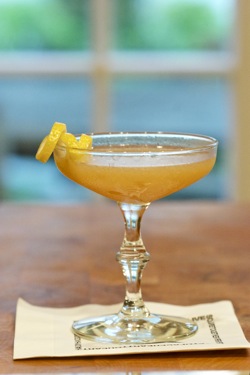
 Prohibition was enacted in 1919 but didn’t go into effect until January of 1920. The thirteen years that followed should have hurt the popularity of cocktails, but limited availability and the constant reminder of illegality did more to promote them! The taboo of drinking made it that much more exciting, and while the social aspect was kept out of the public eye in America—limited to secret back-room speakeasies—most of the innovation and creativity was naturally taking place outside of the United States. Our Drink of the Week is one example of such a creation.
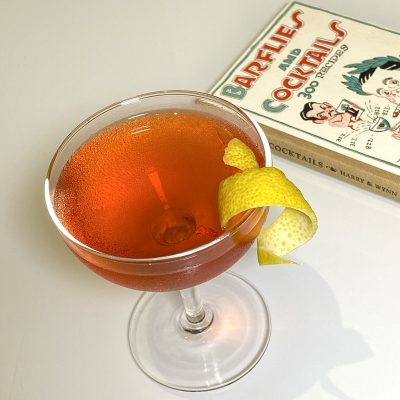
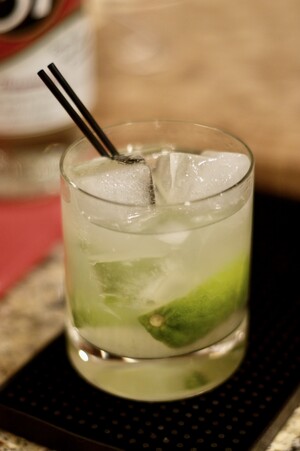
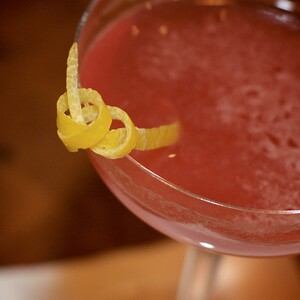
It was a well-known fact that some people in America were simply ignoring the law. So, in 1923 a contest was held to create a word that meant, “a lawless drinker of illegally made or illegally obtained liquor.” The winning entry was submitted by two people independently, and on January 16th, 1924, the Boston Herald published the results and the scofflaw was born. In less than two weeks, Harry’s New York Bar in Paris came up with the Scofflaw Cocktail.
Of course, by 1933 Americans could once again enjoy their favorite beverages without legal complications, and you can too. Given that the significant dates surrounding this drink landed in the month of January, I thought it fitting to feature this as the Drink Of The Week. Here’s the recipe I use to make this cocktail:
Click here and take a bigger gulp of this article →
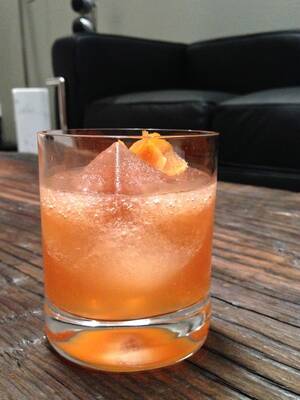
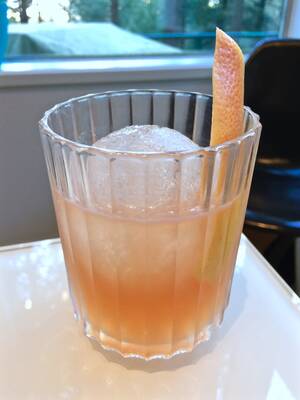
 You don’t have to be a fan of AMC’s Mad Men to be interested in the Old Fashioned cocktail. Even though it’s Don Draper’s favorite, you too can make this one like a Madison Avenue executive. The fact is, the Old Fashioned comes from an era long before Don started drinking. It’s always regarded as a classic, and indeed, along with the Sazerac, it is probably one of the earliest cocktails to be created. The original definition of the cocktail was first printed in 1806 when it was described as “spirits of any kind, sugar, water and bitters.” The Old Fashioned perfectly fits these requirements, although today the word cocktail is used to describe virtually every variety of mixed beverage.
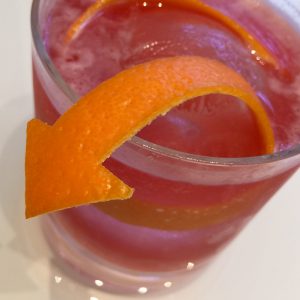
So, what is the Old Fashioned? Well, it’s a drink that has earned it’s own glass, for one. While there are many variations, and some that take additional ingredients way past the realm of the classic recipe, it’s nice to see this one made the way it was originally intended. Basically, it’s a delicious whiskey cocktail typically made with rye or bourbon, sweetened with sugar, enhanced with a dash or two of bitters, and garnished with an orange peel. An easy way to build this drink is to use simple syrup for the sugar and water so you don’t have to worry about dissolving it. I also like to trim up a nice big piece of orange peel so that it looks nice and provides a lot of essential oil. My regular recipe looks like this:
Old Fashioned Cocktail
2 oz bourbon whiskey
1/2 oz simple syrup
2 dashes Angostura bitters
orange peel
Drop a long, wide slice of orange peel (avoiding the white pith) into an old fashioned or rocks glass. Donate simple syrup and Angostura bitters. Carefully press the peel in the bottom of the glass with a muddler to press out the essential oils, not to break the peel apart. Move up and down the peel to extract the oil, then add the bourbon. Add several large ice cubes and stir. As the ice melts, add more cubes and keep stirring until chilled. This will also take the edge off the spirit and bring out the combined flavors and armoas.
Click here and take a bigger gulp of this article →
|
|
Most Popular