|
|
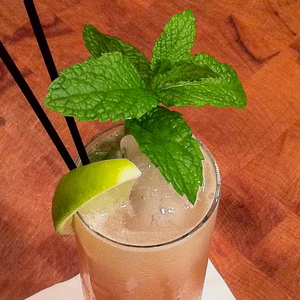
 I wanted to write a few words about my experiments with Punch. As the tagline suggests, Summit Sips is about exploring the mysteries of mixology. Whether or not you like the word “mixology”, I don’t advocate consumption of alcoholic beverages to get “drunk”. I see it more as a culinary pursuit to find a balance of flavors and to pair ingredients in unique (or sometimes classic) ways. Semantics aside, there’s always the benefit of five o’clock refreshment, and sometimes the goal is to lubricate the social gears of a party to stimulate mingling and conversation. In any case, Punch is a great way to explore exotic flavor combinations.
Punch is a borrowed word from the Hindi panch which itself came from the Persian word paantch meaning five, to represent the five typical ingredients in this early beverage: alcohol, sugar, lemon, water and tea or spices. It was brought back to Britain from India in the early 1600s. In fact, punch is arguably one of the first mixed alcoholic drinks to enjoy widespread popularity. Before the American cocktail came on the scene, punch was king.
It’s actually pretty easy to make a punch so potent that it goes just a little too far. Case in point was my own Summit Sips Punch for Grand Old Day. If you wanted to enjoy more than one glass, you had to plan to stay awhile—it really packed a p–, er, I mean, it really packed a wallop! Although I was reproducing a riff on a historic recipe, you can probably guess that the more booze you add, the stronger it gets. However, the harder point to master is achieving good balance, and with punch, that can be tricky when you are combining so many ingredients. Of course, I’m not talking about making “garbage can punch” from your college party days where everyone brings fruit and booze to be dumped into a huge vat for mass consumption. Nor is this about mixing up a batch of Tahitian Treat and pouring in some rum and Sprite. No, we will make a respectable punch—one you can mix for a single guest or something you can build in larger batches to serve at a formal gathering or a dinner party. But how can we ensure a result that’s reasonably strong, balanced, and delicuous?
Fortunately, there’s a memorable little rhyme that can help. It comes from the August 8, 1908 edition of the New York Times which contained an article with the recipe for Planter’s Punch, but the basic framework of ingredients works for just about anything:
Click here and take a bigger gulp of this article →
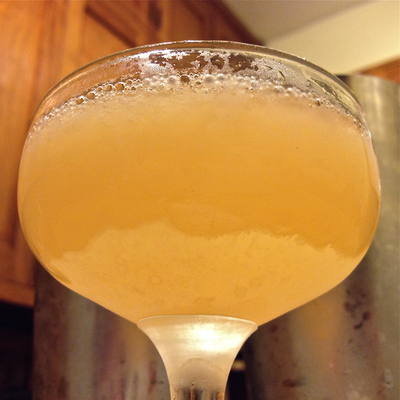
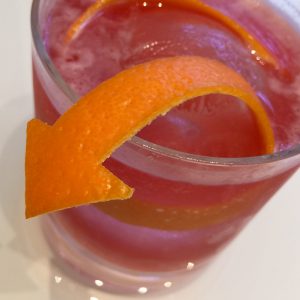
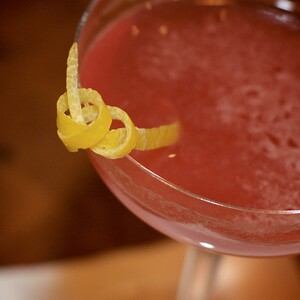
 This week’s Drink Of The Week is actually a recipe I posted last year as a suggestion for using fresh grenadine. So far, I have tried to avoid reposting cocktails that I already mentioned, but today I am going to make an exception. That’s because the Monkey Gland is delicious. It’s a cocktail that bears repeating and one that I need to remind myself about occasionally. It’s one of those drinks that can convince someone that they really do like gin cocktails.
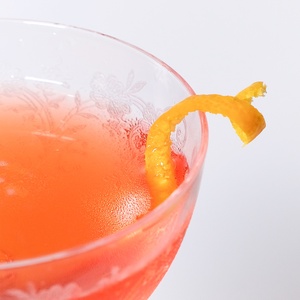
Monkey Gland 2 oz gin 1 oz orange juice 1/4 oz grenadine 1 dash absinthe
Add all ingredients to a mixing glass and shake with ice to chill. Strain into a chilled cocktail glass and garnish with an orange twist.
The Monkey Gland is named for an unusual medical procedure once thought to reinvigorate a man’s sexual prowess. By transplanting a monkey’s testical into a human host,
Take a bigger gulp of this article. . .
 The other day, the booze fairy delivered a bottle of Laird’s Applejack. Well, OK, it wasn’t actually the booze fairy, but rather a good friend “paying” me for some technology assistance. It happens that I occasionally do handy work and technology support for friends who sometimes see fit to compensate me this way. Am I complaining? Certainly not! So, this week’s Drink Of The Week is brought to you by the Technology Support Department at Summit Sips. We don’t advertise “Will Work For Booze” but it sometimes works out that way!
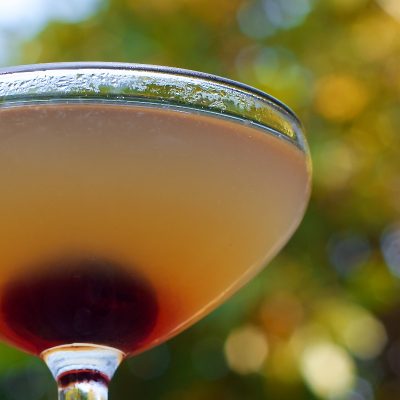
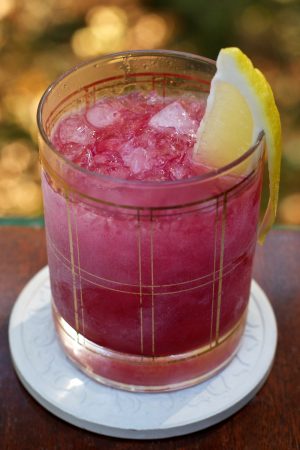
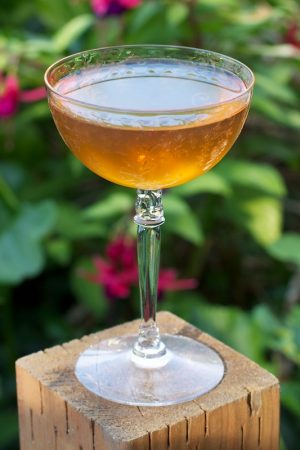
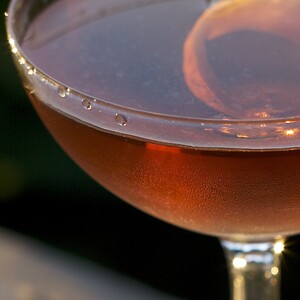
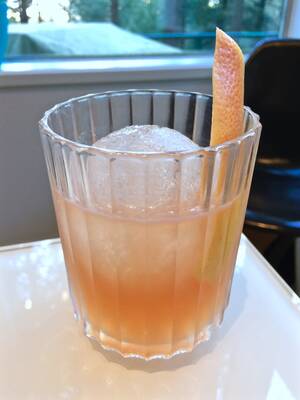
All of my recent posts regarding bourbon left me considering the fact that although it is truly an American spirit, it wasn’t actually the first to be produced in this country. That honor goes to Applejack, a brandy-based spirit produced from fermented apples. As one of our readers pointed out in a comment to my Kentucky Teaser, it was Laird & Company that obtained License #1 in 1780—our country’s first legal distiller. The Jack Rose cocktail pays tribute to this unique spirit. Classically portioned, this smallish cocktail can be made with either lemons or limes—both are delicious—and a few dashes of grenadine. There are many theories as to how this cocktail got its name, and you can entertain yourself with the research. However, I believe some things are often just as simple as they seem. It’s made with Applejack, and it’s rose-colored.
Click here and take a bigger gulp of this article →
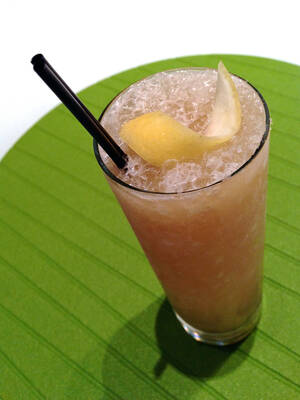
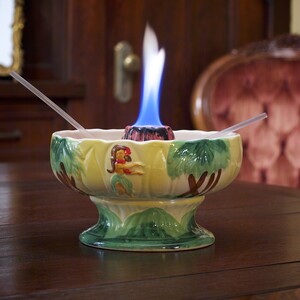
 Chimp In Orbit, huh? This ought to be good! I admit, it’s a really odd name for a drink. So, why monkeys in space?
This week in history. . .
I was researching this week in history and found a few things that seemed thematic to me, although not every story has a good ending. First, on this day in 1986, the Space Shuttle Challenger exploded. I know, it’s not a happy event, and it’s certainly not an image most of us will forget. So, let’s just get the sad stuff out of the way first. In the coming week on February 1, 2003, the world watched in shock and disbelief as the Space Shuttle Columbia broke apart on re-entry. Again, it’s another sad day for the space program. Meaning no disrespect to those brave spacefarers who lost their lives, there were a couple positive achievements that also occurred.
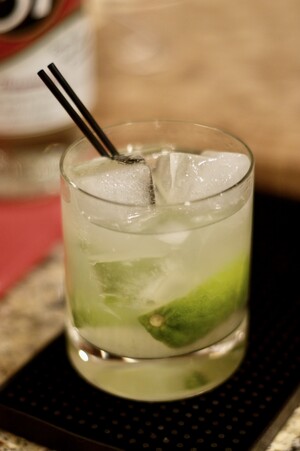
January 31st marks the anniversary of the 1971 Apollo 14 launch, the third mission to land men on the moon. This anniversary coincides with the launch in 1961 (here it comes) that sent a chimpanzee named Ham into space! Is it a crazy excuse to feature this drink? Well, that’s not all! In addition to the space references, the tropical nature of this cocktail is represented in history by the TV show, Fantasy Island which first aired on January 28, 1978. Finally, this day is also Elijah Wood’s birthday. I know, Frodo was a hobbit, not a chimp, but it’s close enough.
Ok, enough with the goofy historical references—let’s get to the drink.
Click here and take a bigger gulp of this article →
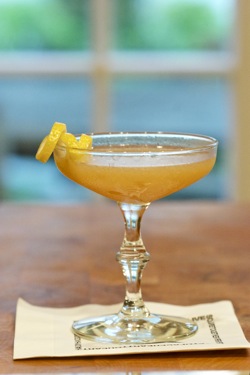
 Prohibition was enacted in 1919 but didn’t go into effect until January of 1920. The thirteen years that followed should have hurt the popularity of cocktails, but limited availability and the constant reminder of illegality did more to promote them! The taboo of drinking made it that much more exciting, and while the social aspect was kept out of the public eye in America—limited to secret back-room speakeasies—most of the innovation and creativity was naturally taking place outside of the United States. Our Drink of the Week is one example of such a creation.
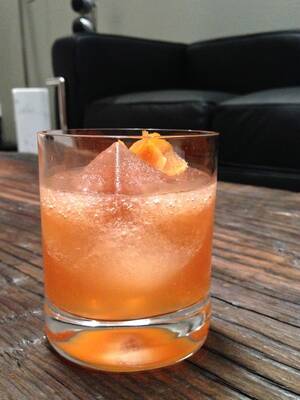
It was a well-known fact that some people in America were simply ignoring the law. So, in 1923 a contest was held to create a word that meant, “a lawless drinker of illegally made or illegally obtained liquor.” The winning entry was submitted by two people independently, and on January 16th, 1924, the Boston Herald published the results and the scofflaw was born. In less than two weeks, Harry’s New York Bar in Paris came up with the Scofflaw Cocktail.
Of course, by 1933 Americans could once again enjoy their favorite beverages without legal complications, and you can too. Given that the significant dates surrounding this drink landed in the month of January, I thought it fitting to feature this as the Drink Of The Week. Here’s the recipe I use to make this cocktail:
Click here and take a bigger gulp of this article →
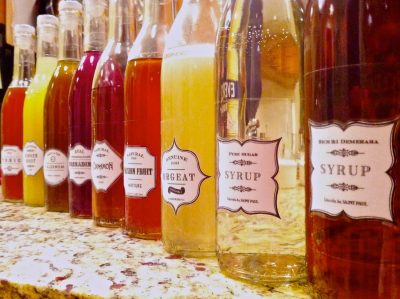
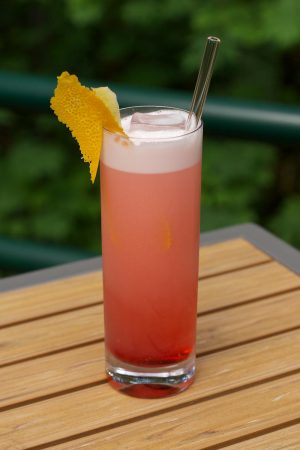
 Randy explains how best to open a pomegranate and release the precious seeds within as well has how to use the juice from these seeds to make grenadine. Once you’ve made your own grenadine, there are several delicious recipes to try, including the Singapore Sling, Monkey Gland, and the Commodore Cocktail.
Take a bigger gulp of this article. . .
|
|
Most Popular