Categories

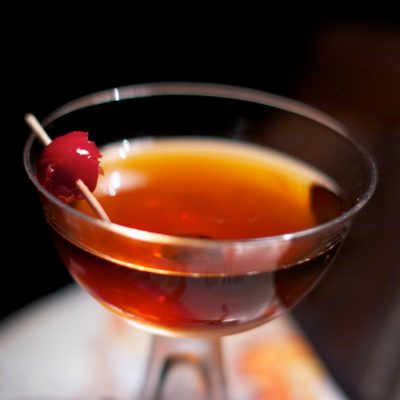
Drink of the Week: Red Hook

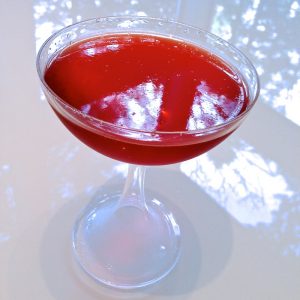
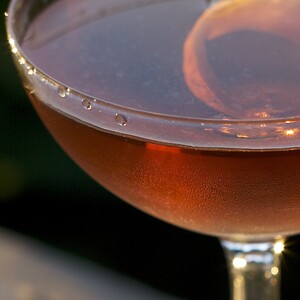
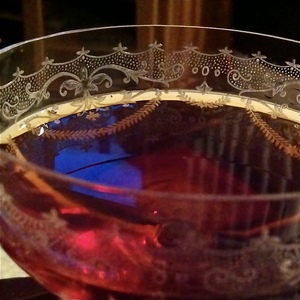
Red Hook

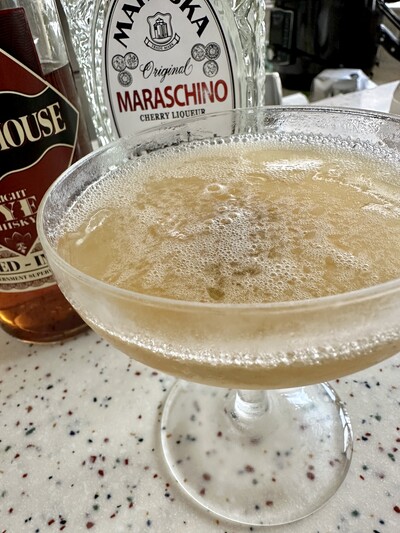
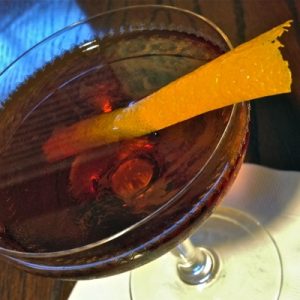
There’s a reason we have so many delicious cocktails that are related the the Manhattan. Because of its simplicity, the Manhattan formula lends itself to a variety of substitutions that can transform what is already a perfect classic into something unexpected and wonderful. It doesn’t happen every time, but when it does, it’s worth the effort. Here’s one example. When it was first created by Vincenzo Errico in 2004 at Milk & Honey in New York, the Red Hook which is named for the New York neighborhood of the Brooklyn borough quickly spun-off a number of variations from its admirers.
A Manhattan is typically two parts whiskey and one part sweet vermouth. It’s fair to say that the vermouth is the dominant flavor. Instead of vermouth, the Red Hook calls for the complex and bitter Punt e Mes. Even at half the volume, Punt e Mes exerts its personality

Take a bigger gulp of this article. . .

Drink of the Week: Brandy Crusta

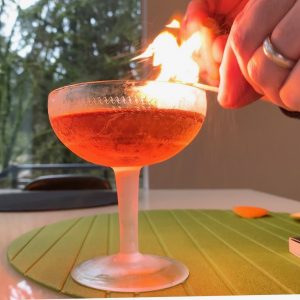
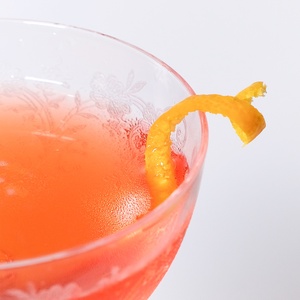
Brandy Crusta Detail

The original definition of cocktail first published in 1806 was a simple combination of spirits, sugar, water and bitters. Drinks like the Old Fashioned and the Sazerac are good examples that have stood the test of time. Yet, recipes evolve, and it didn’t take long for substitutions to occur. For example, instead of sugar and water, why not use simple syrup? And if you wanted a little exotic flair, perhaps you could even use a liqueur to sweeten your cocktail. At some point, citrus was introduced and by the time “Professor” Jerry Thomas wrote The Bar-Tenders Guide in 1862, the updated combination had a name. The Crusta was a fancy creation, all decked-out with a sugared rim and a huge lemon peel for a garnish. The good Professor predicted that the Crusta would eventually outshine the Cocktail. Was he right?
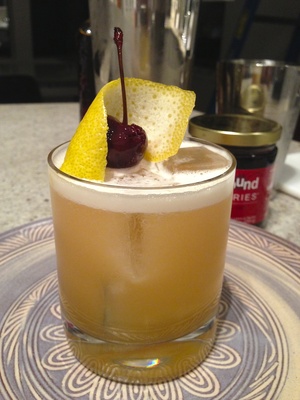
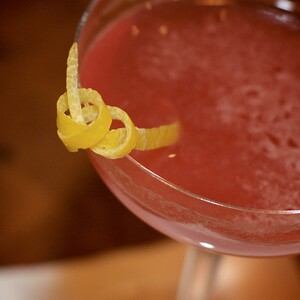
Even though most people have never even heard of a Brandy Crusta,

Take a bigger gulp of this article. . .

Cocktail Cherries

Cocktail Cherries

When fresh cherries are in season, it’s time to make a delicious cocktail garnish. I have a strong opinion that you should take advantage of every opportunity to avoid using those glow-in-the-dark cocktail cherries you normally find on store shelves. Don’t be fooled by their unnaturally bright red coloring or their artificially preserved snappy texture. They are not fruit—the sad shells of what used to be cherries have been completely purged of real cherry flavor, totally robbed of natural color, only to be resurrected in a sinister soup of chemical syrups and artificial flavors and colors. They are the zombies of the preserved fruit world—Frankenstein’s monsters of the cocktail garnish tray. Of course, you can find good cocktail cherries, (I like to use Amarena cherries) but these options can be few and far between. The solution: just make your own.
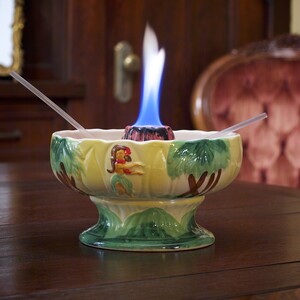
I used to be a fan making spirit-soaked

Take a bigger gulp of this article. . .

Drink of the Week: Improved Gin Cockail

Improved Gin Cocktail

David Wondrich calls it “New York’s answer to the Sazerac.” If you’re a fan of that drink, you probably know that it comes from New Orleans. A true cocktail in the original definition of the word, the Sazerac features whiskey, sugar, water and bitters, plus a little absinthe—a fantastic classic. And since New York was originally a Dutch colony, it makes sense that their version would involve gin—but not just any gin. If we stay true to the period in which this was created, that gin would have been Dutch genever. It would be fair to call this the Improved Holland Gin Cocktail.

Not long ago, we explored genever in the Bols Alaska cocktail, so here’s another fun way to use it. If you’ve been thinking about adding genever to your cabinet, let me tell you, it’s time. The truth is, genever is a very interesting product that can

Take a bigger gulp of this article. . .

Drink Of The Week: Riviera, two ways

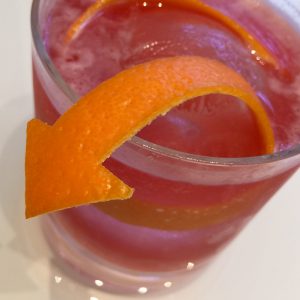
Riviera Cocktail

Sometimes I feature classics, sometimes a riff, and once in a while it’s an exotic Tiki. There’s not really a pattern to the Drinks Of The Week here at Summit Sips, but I do think it’s important to understand classic recipes and techniques. Over the past year or so, some of the recipes (including a few that don’t fall upon a Thursday) required a little more preparation to pull them together. Such cases usually involved preparing some homemade ingredient. That can mean making a better version of something you can find on shop shelves, or  sometimes it’s an opportunity to create your own version of an ingredient that’s impossible to find anywhere. This week, I want to feature a recipe that relies upon a basic infusion for the base spirit. It’s the Riviera cocktail by Toby Maloney, a popular favorite from The Violet Hour.

I don’t see the Riviera

Take a bigger gulp of this article. . .

Oscar Cocktails

jrenner

“And the nominees for Best Supporting Cocktails are. . .”

Wait, “Best what?” Ok, that’s crazy, but if the Academy asked me who should be nominated for this category, I’d steer them toward this recent article in the New York Times. Have a look at some of the Oscar-contender-inspired cocktails and you tell me who should win!

In the past, my wife and I have often hosted Oscar parties, but this year, like the last several, we have chosen to keep it simple so we can enjoy the event on our own. That doesn’t mean we aren’t shouting at the television or cheering our own selections from this year’s ballot. Still, party or not, it’s a lot more fun with a good cocktail, so imagine my delight when I spotted the Jeremy Renner cocktail in the Times this morning. I just had to try it.

Jeremy Renner by Leo Robitschek,

Take a bigger gulp of this article. . .

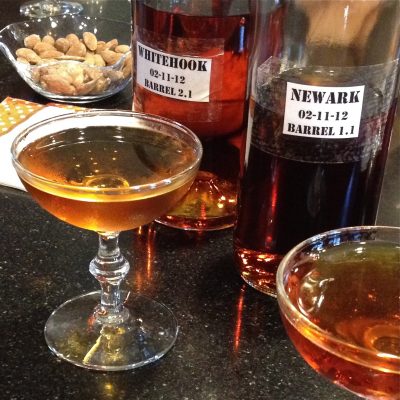
Drink of the Week: Newark

Newark Detail

There’s no reason to take any of this mixology stuff too seriously. Whether or not you consider the art of mixing drinks a science, it would be hard to convince most people that it’s an exact science. Everyone has an opinion about what mixes well together, what proportions work best, what tastes good and what should be avoided. The whole reason I created Summit Sips was to introduce readers to ingredients, flavors and techniques that might be new to you—because so much of it was new to me—and let you decide what to like or dislike. The journey so far has led to homemade ingredients, unusual spirit categories, tools, techniques and some fascinating history. It all adds up to a deeper understanding of what goes into the shaker so that we are all better appreciators of what comes out. Today, we pull together a variety of interesting ingredients to

Take a bigger gulp of this article. . .

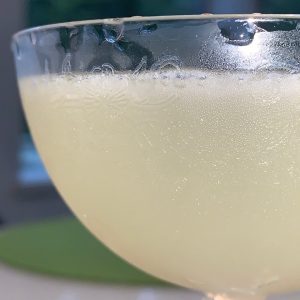
Drink Of The Week: Floridita Daiquiri

Floridita Daiquiri

This week we finish up our short Caribbean series with a two-for-one daiquiri post.

Take a bigger gulp of this article. . .

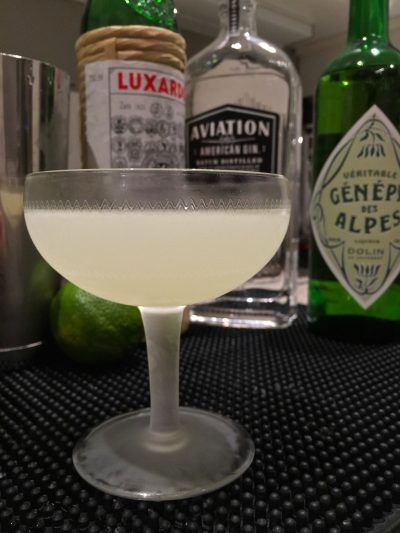
Drink Of The Week: Last Word

Last Word Detail

This installment of the Drink of the Week is actually the last drink of 2010. If you have been following along, that makes 52 cocktail recipes posted over the past year, not including homemade ingredients and numerous other posts in-between. It has been fun to keep the momentum going with weekly features. I want to say thanks to everyone who reads and subscribes to Summit Sips and to those who are friends on Facebook or who follow via Twitter. I especially appreciate those of you who see fit to comment on the posts. Part of the fun that comes with these recipes is hearing what others are trying and discussing the results. To see all of the 2010 Drinks of the Week on one page, I created a special 2010 DOTW Archive that you can also access from the Archives page in the menu above.

I wanted to end

Take a bigger gulp of this article. . .

Punch Drunk

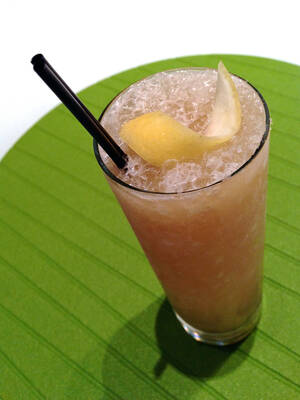
Punch

I wanted to write a few words about my experiments with Punch. As the tagline suggests, Summit Sips is about exploring the mysteries of mixology. Whether or not you like the word “mixology”, I don’t advocate consumption of alcoholic beverages to get “drunk”. I see it more as a culinary pursuit to find a balance of flavors and to pair ingredients in unique (or sometimes classic) ways. Semantics aside, there’s always the benefit of five o’clock refreshment, and sometimes the goal is to lubricate the social gears of a party to stimulate mingling and conversation. In any case, Punch is a great way to explore exotic flavor combinations.

Punch is a borrowed word from the Hindi panch which itself came from the Persian word paantch meaning five, to represent the five typical ingredients in this early beverage: alcohol, sugar, lemon, water and tea or spices. It was brought back to Britain from India in the early 1600s. In fact, punch is arguably one of the first mixed alcoholic drinks to enjoy widespread popularity. Before the American cocktail came on the scene, punch was king.

It’s actually pretty easy to make a punch so potent that it goes just a little too far. Case in point was my own Summit Sips Punch for Grand Old Day. If you wanted to enjoy more than one glass, you had to plan to stay awhile—it really packed a p–, er, I mean, it really packed a wallop! Although I was reproducing a riff on a historic recipe, you can probably guess that the more booze you add, the stronger it gets. However, the harder point to master is achieving good balance, and with punch, that can be tricky when you are combining so many ingredients. Of course, I’m not talking about making “garbage can punch” from your college party days where everyone brings fruit and booze to be dumped into a huge vat for mass consumption. Nor is this about mixing up a batch of Tahitian Treat and pouring in some rum and Sprite. No, we will make a respectable punch—one you can mix for a single guest or something you can build in larger batches to serve at a formal gathering or a dinner party. But how can we ensure a result that’s reasonably strong, balanced, and delicious?

Fortunately, there’s a memorable little rhyme that can help. It comes from the August 8, 1908 edition of the New York Times which contained an article with the recipe for Planter’s Punch, but the basic framework of ingredients works for just about anything:

Click here and take a bigger gulp of this article