          
|
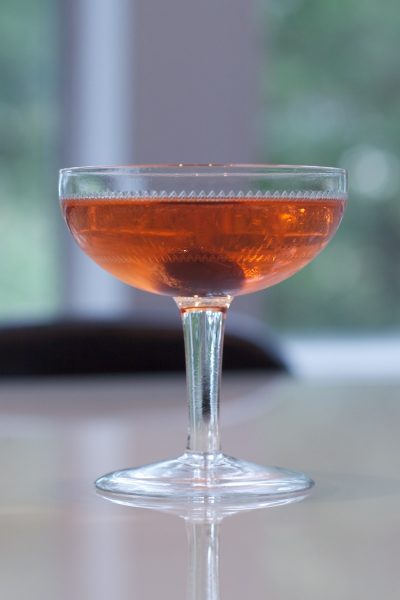
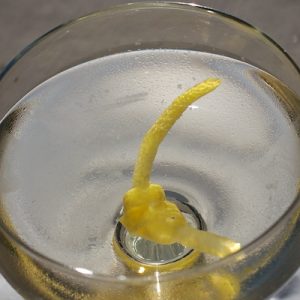
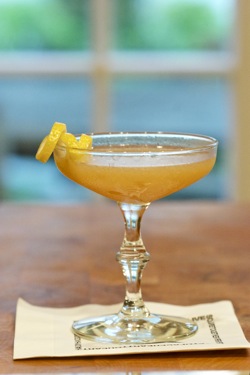
There's a certain level of comfort when it comes to the classics. There was no Tiki movement, no vodka, and folks knew what to expect from a cocktail. By today's standards, times were simpler then, although it's all relative. Still, we think there is virtue in exploring basic, spirit-driven recipes that have stood the test of time—and some that have become lost in it. The Metropole is one such drink.
Originally the house cocktail for the Metropole Hotel in New York City, this brandy based drink has survived since the late 1800s while the hotel where it was created is long gone. It's a common story shared by many classic cocktails, although in our opinion, too few of them contain brandy. It's a simple enough formula, but it has changed somewhat over the years.
Metropole 2 oz cognac 1 oz dry vermouth .5 teaspoon simple syrup 2 dashes Peychaud’s
Click here and take a bigger gulp of this article. . .
We are sometimes asked: Where do you find content? What inspires you to write about one particular topic or another? How do you come up with recpies to post? While completely original ideas do come along, it’s far more common (and often more interesting) to find inspiration among existing sources. We certainly didn’t invent the recipe for falernum, nor did we make the first homemade tonic or cola. Even barrel-aged cocktails are documented at least as far back as the first published cocktail book. Acknowledging previous accomplishments is one thing, but confirmation is so much more rewarding. Drink books both old and new are good places to start. The online cocktail community is also very collaborative. But nothing quite compares to sitting opposite a professional and watching a master
Click here and take a bigger gulp of this article. . .
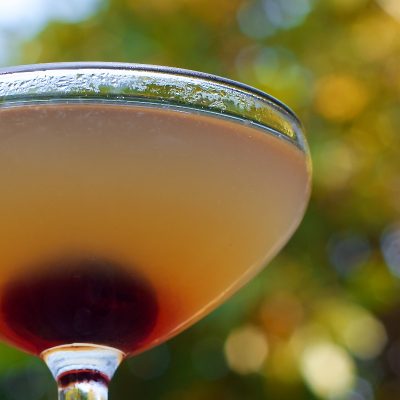
As the cooler months of autumn begin to replace the summer's heat, we often think of cocktails made with apples and darker spirits. So often, the drinks we post here at Summit Sips are either spirit-driven, bitter, or they end up balanced slightly toward the sour side of the spectrum. Here's a drink that will appeal to those of you who like something a little sweeter looking for a pleasant sipper as the leaves change. There are several versions of the Golden Dawn which originated around 1930, but this one seems to be the most interesting because it retains a depth of flavor while keeping the sugar under control. It comes to us by way of Ted Saucier's Bottoms Up, a risqué cocktail book first published in 1951. It's also one of those drinks that gets away with exactly equal proportions.
Golden Dawn .75 oz Calvados .75 oz
Click here and take a bigger gulp of this article. . .
Over the past couple of years we’ve discussed recipes, spirits, commercial and homemade ingredients, technique and even our favorite tools—but a subject we haven’t spent a lot of time on is the cocktail garnish. We’ve shared a few details as recipes required, but we thought it might be helpful to compile a list of terms and techniques so our readers have a place to go for reference and suggestions. After all, the garnish is part the cocktail. Sometimes there’s flexibility and other times skipping or changing it can make or break the recipe. Why Garnish? It’s important to understand the reasons for a garnish because it will help you recognize when you might be able to get away with an adjustment versus those times when it’s absolutely crucial to nailing a recipe’s intended flavor profile. You may decide you cannot make a particular
Click here and take a bigger gulp of this article. . .
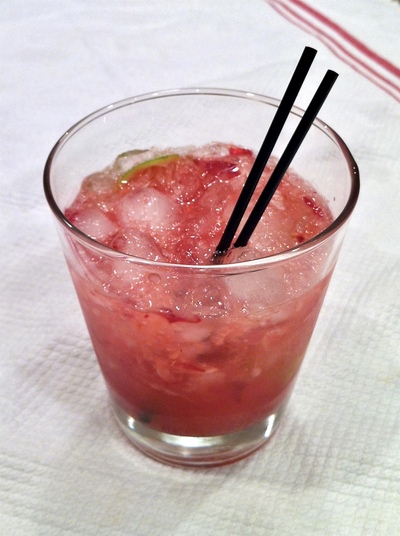
Muddling cherries and lime
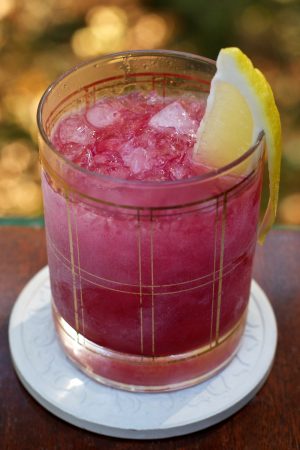
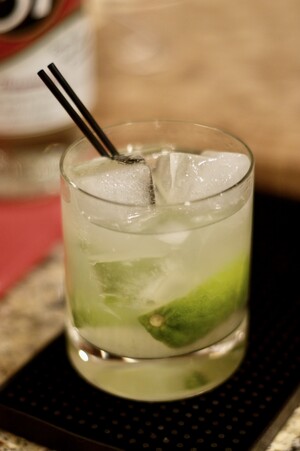
This drink of the week is pretty easy to pull off. It's a Caiprissima, which is like a Caipirinha only it uses rum instead of cachaça, and of course, this one also has cherries in it. According to my notes, I saw this somewhere back in June so it's probably a summer drink. It's been raining in December around here, so a summer drink sounds like a good drink in my book. This Caiprissima variation was created by Meaghan Dorman of Raines Law Room, Manhattan. If you are familiar with the Caipirinha, you know the drill—just use rum and throw in some cherries!
The process goes something like this: Take some pitted cherries and drop them into a shaker. Add your simple syrup (or just a couple spoons of sugar if you prefer) and muddle them into oblivion. Drop in
Click here and take a bigger gulp of this article. . .
The name may not inspire you, but this drink actually surprised me. If you dig around in old cocktail books for this recipe you find that they are all different. Flipping through the pages of the Savoy, for example, you find a recipe that lacks the Applejack and has no citrus. It doesn't sound like something I want to try. You can find versions that add brandy to the mix and even some with cream. One might specify lemon while another will call for lime. It seems that darn near anything that had a light pink hue was once called a Pink Lady—a name you could just pass by thinking it's a girlie drink before you started comparing vintage recipes. Even Ted “Dr. Cocktail” Haigh goes to great lengths in his Vintage Spirits and Forgotten Cocktails to avoid revealing the name of this drink until you turn the page. But
Click here and take a bigger gulp of this article. . .
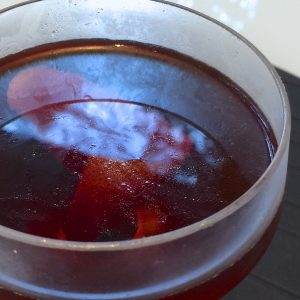
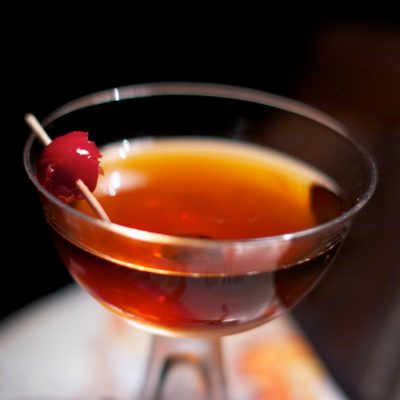
There's a reason we have so many delicious cocktails that are related the the Manhattan. Because of its simplicity, the Manhattan formula lends itself to a variety of substitutions that can transform what is already a perfect classic into something unexpected and wonderful. It doesn't happen every time, but when it does, it's worth the effort. Here's one example. When it was first created by Vincenzo Errico in 2004 at Milk & Honey in New York, the Red Hook which is named for the New York neighborhood of the Brooklyn borough quickly spun-off a number of variations from its admirers.
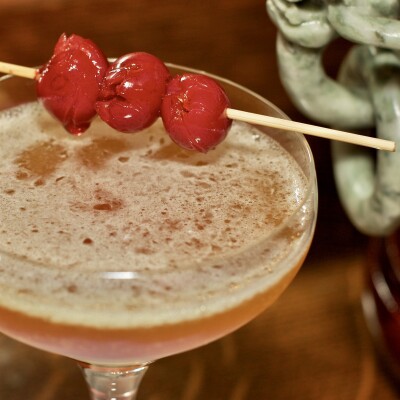
A Manhattan is typically two parts whiskey and one part sweet vermouth. It's fair to say that the vermouth is the dominant flavor. Instead of vermouth, the Red Hook calls for the complex and bitter Punt e Mes. Even at half the volume, Punt e Mes exerts its personality on
Click here and take a bigger gulp of this article. . .
As far as I am aware, there's nothing truly oriental about the cocktail this week. It appears in the Savoy, not some asian bar manual. It is accompanied by a story that mentions the Philippines—do we really believe that? It may be an early 20th century recipe, but unfortunately it's not a very popular one. That's a shame because it's a decent drink.
I'll try just about anything that has rye whiskey, especially if it also has sweet vermouth. But the Oriental also has lime and curaçao which takes the flavor in an unexpected direction. I guess that sorta makes it a Manhattan Sour.
Oriental 1.5 oz rye whiskey .75 oz orange curaçao .75 oz sweet vermouth .5 oz fresh lime juice
Add ingredients to a shaker with ice, shake and strain into a chilled cocktail glass. Garnish with a maraschino or brandied cherry.
Click here and take a bigger gulp of this article. . .
When fresh cherries are in season, it's time to make a delicious cocktail garnish. I have a strong opinion that you should take advantage of every opportunity to avoid using those glow-in-the-dark cocktail cherries you normally find on store shelves. Don't be fooled by their unnaturally bright red coloring or their artificially preserved snappy texture. They are not fruit—the sad shells of what used to be cherries have been completely purged of real cherry flavor, totally robbed of natural color, only to be resurrected in a sinister soup of chemical syrups and artificial flavors and colors. They are the zombies of the preserved fruit world—Frankenstein's monsters of the cocktail garnish tray. Of course, you can find good cocktail cherries, (I like to use Amarena cherries) but these options can be few and far between. The solution: just make your own.
I used to be a fan making spirit-soaked cocktail
Click here and take a bigger gulp of this article. . .
As some of you may have heard, the Town Talk Diner is now closed for business. It's no secret that I considered Town Talk one of the best places to find good cocktails. So, when I heard the news, I decided to reach out to Nick Kosevich who was the front of the house manager there for several years. He has won numerous awards including the first annual Iron Bartender Competition in 2009 and was voted Best Bartender by City Pages in 2008. It's fair to say Nick has been one of the most influential figures in transforming the local craft cocktail scene. Given his history with the restaurant, I wanted to find out his perspective on recent events.
Leaving a five-year gig at Palomino to work with Tim Niver and Aaron Johnson, both of whom he considers some of the best restauranteurs in the area, Nick helped open the
Click here and take a bigger gulp of this article. . .
|
 Antique/Vintage Store Spotlight:

|